
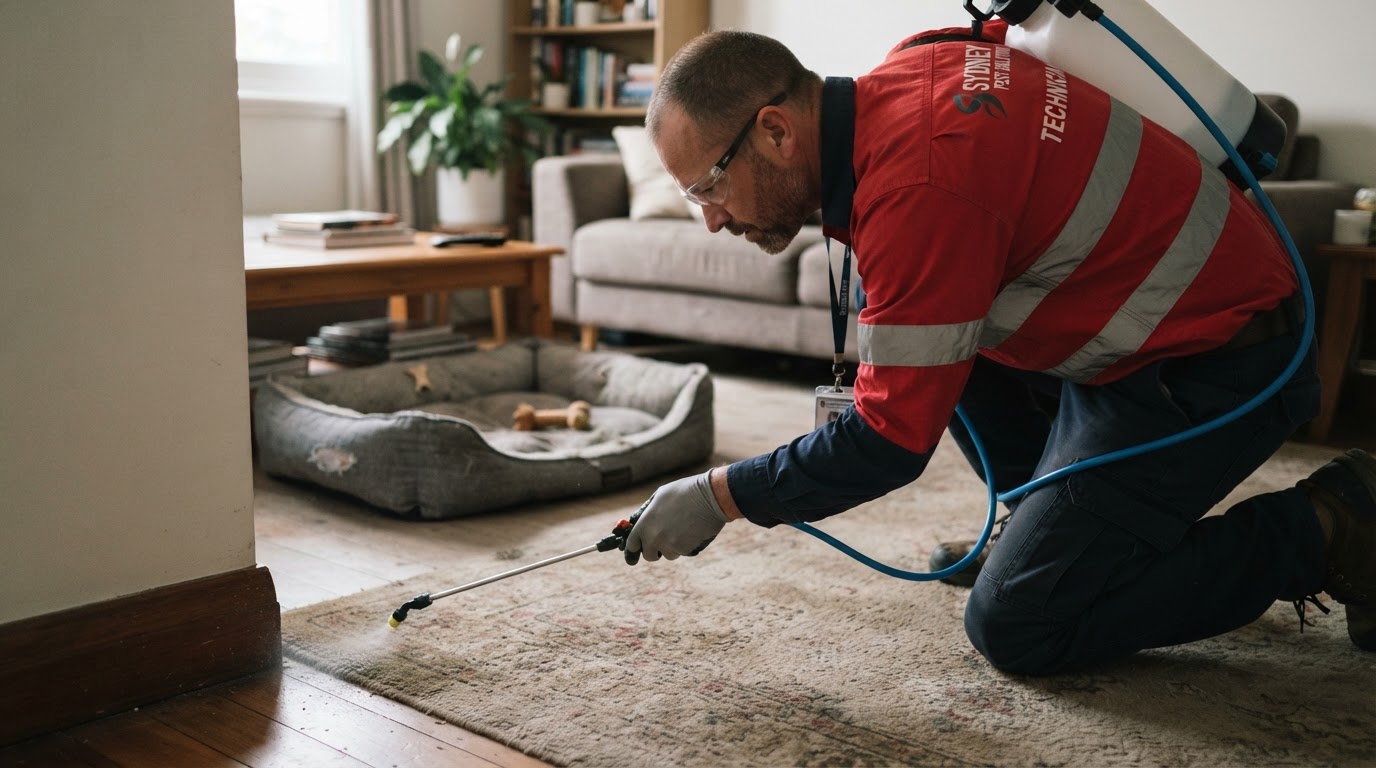
To get rid of fleas in a Sydney home with pets, you need to treat the carpets and pet areas with insect growth regulators and have your pets treated by a vet on the same day. Treating the pet alone rarely fixes the problem, because most of the flea population lives in the home as eggs and larvae. Priority Pest Services treats carpets, rugs and yard areas to break the flea breeding cycle. Flea control starts at $200 for a standard home and carries a 6-Month Warranty* on internal infestations.
- Only 5 per cent of a flea problem lives on the pet - the rest is in the home
- Insect growth regulators stop flea eggs and larvae developing into biting adults
- Flea pupae are protected and can hatch over weeks - keep vacuuming
- Treat your pets on the same day as the home for the best result
Why do fleas keep coming back after I treat my pet?
Because the pet is only a small part of the problem. In a typical flea infestation, adult fleas on the pet make up only about 5 per cent of the total population. The rest lives in the home as eggs, larvae and pupae in carpets, pet bedding and floor cracks. Treating the pet kills the adults on its body, but the eggs and larvae in the carpet keep developing. New adults emerge over the following weeks and jump back on the pet. To break the cycle, you have to treat the home and the pet at the same time.
How do I know if I have fleas in my home?
The signs are usually obvious if you know what to look for. If you have pets, the signs often start with the animal and move to the home.
| Sign | What to check |
|---|---|
| Pet scratching more than usual | Check around the neck, base of tail and belly |
| Bites around ankles | Fleas jump from the carpet onto humans, biting lower legs |
| Fleas on carpets or pet bedding | Small dark insects that jump when disturbed |
| Flea dirt in pet fur | Small black specks that turn red on a damp white tissue |
| Pets restless at night | Flea bites cause itching and discomfort |
Sydney's warm, humid climate means fleas can breed year round, not just in summer. Homes near parks and reserves in the Northern Beaches and the Sutherland Shire often see the most flea pressure because of the high pet population and coastal humidity.
"Treating your pet kills the adults. Treating the home kills the next generation. You need both."
How do professionals get rid of fleas?
Professional flea control uses insect growth regulators, or IGRs, to break the breeding cycle. IGRs stop flea eggs and larvae from developing into biting adults. They are applied to carpets, rugs, pet bedding areas and shaded yard areas where pets rest. The adults die off and the juveniles never reach adulthood, so the colony collapses over several weeks.
- Inspect: We check where pets sleep and spend time, inside and out, to find the breeding hotspots.
- Treat inside: We apply IGRs to carpets, rugs, pet bedding areas and floor cracks where eggs and larvae live.
- Treat outside: We treat shaded yard areas where pets rest, as fleas breed in damp, shaded soil.
- Advise: We explain what to expect over the next few weeks and how to help the treatment work.
Why am I still seeing fleas after treatment?
This is the most common question, and it is expected. Flea pupae are protected inside a cocoon and are not killed by any treatment. They can sit dormant for weeks and hatch when they sense warmth, vibration or carbon dioxide from a passing pet or person. This is why you may see new fleas for 2 to 3 weeks after treatment. The key is to keep vacuuming daily. Vacuuming stimulates the pupae to hatch, and the new adults then contact the treatment in the carpet and die. The cycle breaks once all the pupae have hatched. See our flea control service.
| Flea stage | Where it lives | Killed by treatment? |
|---|---|---|
| Adult | On the pet | Yes - by the vet treatment |
| Egg | In carpets and pet bedding | Yes - IGR stops development |
| Larva | In carpet fibres and cracks | Yes - IGR stops development |
| Pupa | Protected in a cocoon | No - hatches over weeks, then dies |
Key tips to keep fleas out of your home
- Treat your pets all year - Sydney's warm climate means fleas breed year round, not just in summer.
- Vacuum daily after treatment - it stimulates pupae to hatch so the new adults contact the treatment.
- Wash pet bedding on a hot cycle - heat kills fleas and eggs at all stages.
- Keep your lawn trimmed - fleas breed in damp, shaded grass, not short, sun-exposed lawns.
- Empty the vacuum outside - flea pupae can survive inside the vacuum cleaner bag.
- Book the home treatment on the same day as the vet - this is the single most important step.
Fleas driving you and your pets crazy?
Priority Pest Services treats carpets, pet areas and yards with insect growth regulators that break the flea breeding cycle. Flea control starts at $200 for a standard Sydney home and carries a 6-Month Warranty*. Treat your pets on the same day for the best result. Call us or request a free quote online today.
Frequently Asked Questions
How much does flea control cost in Sydney?
Flea control for a standard Sydney home starts at $200. This includes treatment of carpets, pet bedding areas and shaded yard areas. It carries our 6-Month Warranty* on internal flea activity.
Do I need to leave the house during a flea treatment?
Yes. We ask you to leave for 2 hours during a flea treatment, along with your pets. This gives the product time to dry and settle before you and the animals return.
Why am I still seeing fleas after the treatment?
Flea pupae are protected inside a cocoon and are not killed by any treatment. They can hatch over 2 to 3 weeks. Keep vacuuming daily so the new adults hatch, contact the treatment and die. The problem clears once all the pupae have hatched.
Should I treat my pets too?
Yes. Have your pets treated by your vet on the same day as the home treatment. This is the single most important step, because the adults on the pet will otherwise keep laying eggs in the carpet and restart the cycle.
Are the products safe for my kids and pets?
Yes. Keep pets and children off treated areas until the spray dries, which takes about 2 hours. The products we use are designed for use in homes with pets and children when the label instructions are followed.