
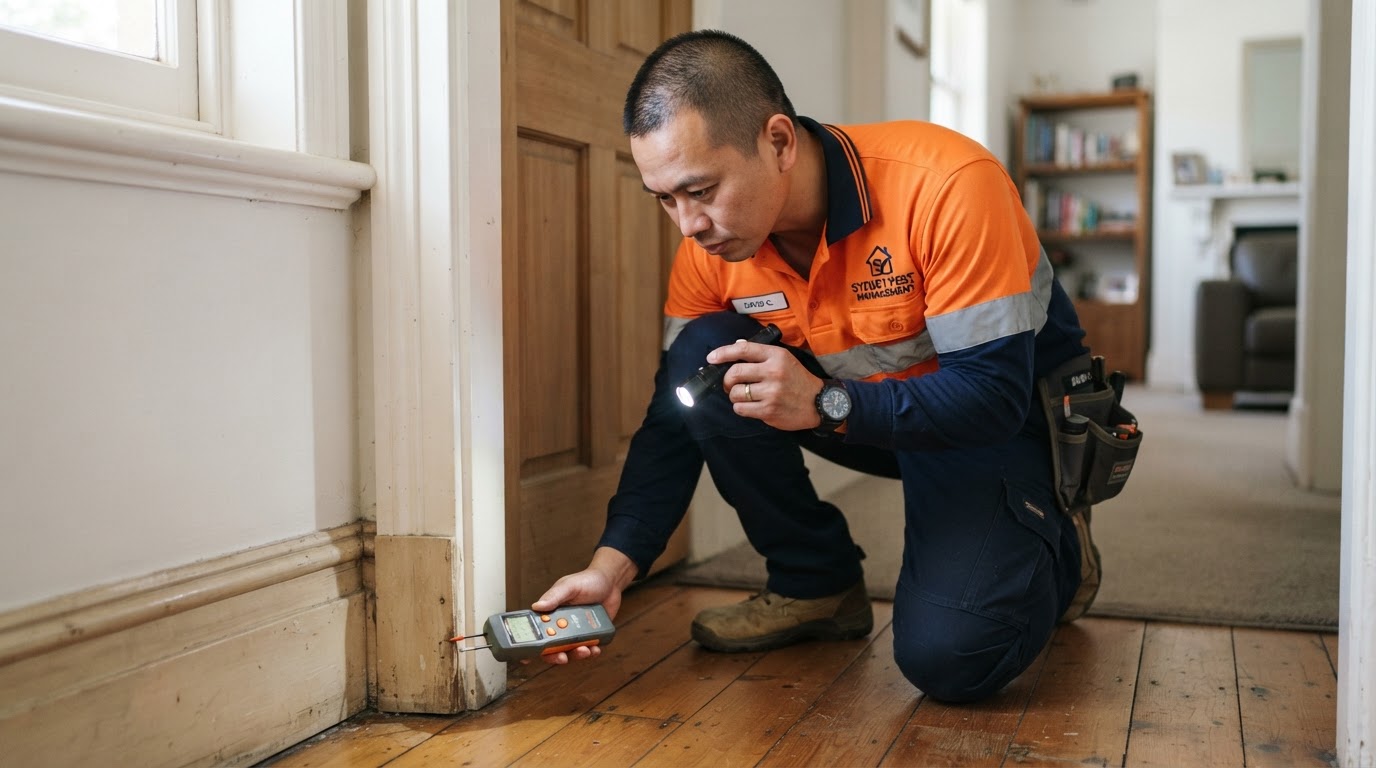
The top 7 signs of termites in a Sydney home are hollow-sounding timber, mud tubes on walls, tight-fitting doors, discarded wings, sagging floors, blistered paint, and termite droppings (frass). If you spot any of these, do not disturb them. Call Priority Pest Services for a professional inspection from $200.
- 1 in 3 Australian homes will suffer termite damage in their lifetime
- Termites eat timber from the inside out, so damage is often severe before it is visible
- A professional termite inspection starts at $200 and includes a full report
Why are termites such a problem in Sydney?
Sydney's warm, humid climate is ideal for subterranean termites. These insects feed on cellulose in timber, and they do it silently from the inside out. Whether you live in a heritage terrace in the Inner West or a newer build in the Hills District, your home is at risk. The CSIRO estimates that 1 in 3 Australian homes will experience termite damage. Standard home insurance does not cover it, so early detection is the only way to avoid a bill that can run into the tens of thousands.
1. Hollow-sounding timber
Tap your skirting boards, door frames, and architraves with the handle of a screwdriver. Healthy timber sounds solid. Termite-damaged timber sounds hollow, papery, or dull. This happens because termites eat the wood from the inside, leaving only a thin layer of paint or veneer. If the timber gives way under light pressure, the infestation is already advanced.
2. Mud tubes on exterior walls
Subterranean termites need moisture to survive, so they build pencil-sized mud tubes (also called shelter tubes) to travel between their underground colony and your home. Check your exterior brickwork, concrete stumps, subfloor piers, and the slab edge. A mud tube running up your wall is a direct sign of active termites. Never break these tubes open - it forces the colony to relocate and spread.
"Never break open a mud tube. You will only push the termites deeper into hidden areas of your home."
3. Tight-fitting doors and windows
Termite activity produces moisture as they digest timber. This moisture causes door and window frames to swell and warp, making them suddenly difficult to open or close. Many homeowners mistake this for seasonal humidity. If a door that worked fine last month now jams, have it inspected. A professional termite inspection will confirm whether termites are the cause.
4. Discarded wings around windowsills
On warm, humid evenings, winged termites called alates leave the nest to start new colonies. After they swarm, they shed their wings. Finding piles of small, translucent wings on your windowsills, in cobwebs, or near light fittings is a major warning sign. It means a mature termite colony is nearby, and a new one may already be establishing itself in your home.
5. Sagging or buckling floors
When termites eat the structural joists and bearers under your floorboards, the floor loses its support. You may notice a sagging or spongy feel when you walk across a room. In severe cases, floorboards may buckle or separate. This is a sign of significant structural damage and requires immediate attention from a licensed pest controller.
| Sign | Where to check | Severity |
|---|---|---|
| Hollow timber | Skirting boards, door frames | Moderate to severe |
| Mud tubes | Exterior walls, slab edge | Active infestation |
| Discarded wings | Windowsills, light fittings | Colony nearby |
| Sagging floors | Subfloor joists | Severe structural |
6. Blistered or bubbling paint
Termites tunnel close to the surface of timber, and the moisture they introduce can cause paint to blister, bubble, or peel. This is often mistaken for water damage. If you see paint bubbling on skirting boards or door frames with no obvious water source nearby, tap the area. If it sounds hollow, termites are likely feeding just beneath the surface.
7. Termite droppings (frass)
Drywood termites push their droppings, called frass, out of small holes near their feeding sites. Frass looks like tiny, pellet-shaped grains of sand or sawdust, often found in small piles on floors or window sills. If you find unexplained piles of what looks like coarse sand or pepper near timber, it is worth having it identified by a professional.
What to do if you find these signs
The single most important rule is: do not disturb the termites. Do not spray them with bug spray. Do not break open the timber or the mud tubes. Disturbing them causes the colony to retreat and spread to other areas of your home, making treatment harder and more expensive. Instead, follow these steps.
- Leave the area untouched: Tape over any exposed timber or mud tubes to prevent further disturbance.
- Book a professional inspection: A licensed technician will map the full extent of the infestation using moisture meters and visual checks.
- Get a treatment plan: Depending on the severity, this may include baiting, a chemical barrier, or a full termite treatment.
- Install prevention: A post-construction barrier protects your home from future attacks.
Key tips to protect your Sydney home from termites
- Book an annual termite inspection - the Australian Standard recommends every 12 months, or every 6 months in high-risk areas.
- Remove timber debris and formwork from under your home and subfloor.
- Fix leaking taps and pipes - termites are drawn to moisture.
- Keep garden mulch at least 200mm away from exterior walls.
- Ensure good subfloor ventilation to reduce humidity under your home.
Worried about termites in your Sydney home?
If you have noticed any of these 7 signs, do not wait. Priority Pest Services provides comprehensive termite inspections from $200 across Greater Sydney, backed by 20+ years of experience. Do not disturb the termites - call us first and we will map the colony and recommend the right treatment.
Frequently Asked Questions
How much is a termite inspection in Sydney?
A comprehensive termite inspection for a standard Sydney home starts at $200. This includes a full check of the interior, exterior, roof void, and subfloor, plus a written report.
What are the first signs of termites?
The earliest signs are usually hollow-sounding timber, mud tubes on exterior walls, and tight-fitting doors. Discarded wings on windowsills are another early warning that a colony is nearby.
Can I treat termites myself?
No. Supermarket sprays only kill the termites you can see and cause the colony to retreat and spread. Termite treatment requires licensed professionals with specialised equipment and products.
Does home insurance cover termite damage?
No. Standard home insurance policies in Australia do not cover termite damage. It is classified as a preventable maintenance issue, which is why annual inspections are essential.
How often should I get a termite inspection?
The Australian Standard recommends a professional termite inspection at least every 12 months. In high-risk areas near bushland, every 6 months is advisable.